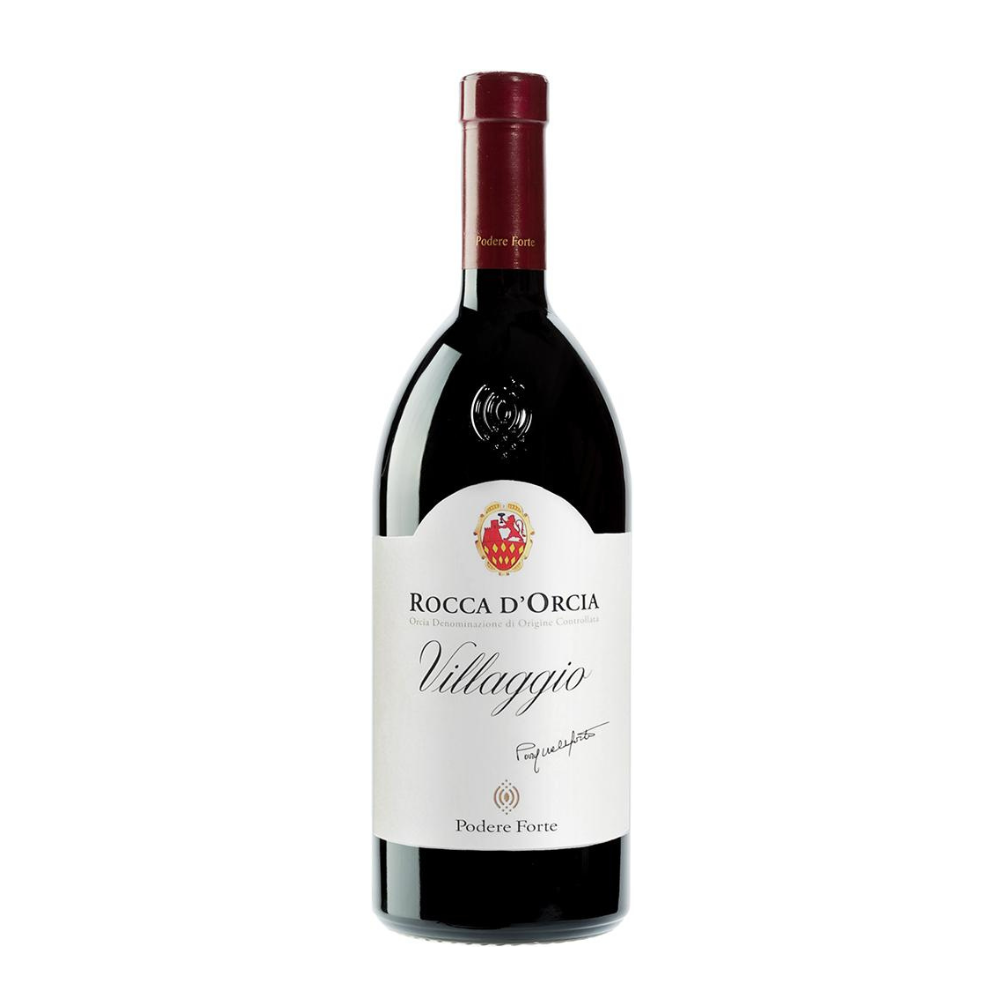

Podere Forte, Orcia, Villaggio
Podere Forte, Orcia, Villaggio
Wine Type: Red Wine
Grape(s): Sangiovese
Country: Italy
Region: Tuscany, Orcia Rosso (Val d'Orcia)
Organic: No
Vegan: No
Biodynamic: Yes
ABV: 12.5%
Winemaker: Pasquale Forte
Winery: In a historical Tuscan village, farmer-engineer Pasquale Forte runs an agricultural company that covers 500 hectares (27 of which are vineyards, 16 hectares of which are in production), five million square metres in the Val d'Orcia (a UNESCO World Heritage Site since 2004), on the Sienese hills. His name is Pasquale Forte and he defines himself as an 'orchestra conductor'. His 'musicians' produce above all great wines, and take care of the vineyards, the olive groves, the botanical garden, the breeding of Cinta Senese pigs (from which they obtain excellent cold cuts), the flock of sheep, the Chianina cows, the farmyard animals – including chickens, hens, guinea fowl and rabbits – and even the wheat fields surrounding the iconic Vitaleta Chapel.
It all began in the mid-1990s when the engineer visited the Castiglione d'Orcia area and fell in love with it. In 1997 he decided to set up the farm that bears his name, discovering on the land a place with a centuries-old history: the abandoned Podere Petrucci. It would become the place he chose to restore the Valdorcian agricultural and wine-growing tradition.
Winemaking: Villaggio is an espression of varied vineyards/soils and primarily from younger vines. The name Villaggio was chosen as the concept of "Vin de Village" used in Burgundy: An accessible, ready to drink, appealing wine. Spontaneous fermentation takes place in French oak vats as does malolactic conversion, where the ageing continues for 14-16 months before blending. Then the wine has 6-8 months of bottle maturation.
Tasting Notes: This has a fresh, clean nose with hints of sour black cherry and a touch of iodine. Elegant, with citrus notes. On the palate, it's grippy but very elegant, with pleasant tannins that make it very drinkable, with a savoury, mineral finish. Pair with both cold cuts as an aperitif, starters or white meat.
Share